


Jordin Sparks is a Grammy-nominated, multi-platinum recording artist, but she also wants to spark a conversation about the emotional and social impact of sickle cell disease.
Sickle Cell Disease Association of America, Inc. thanks Jordin Sparks, for your commitment to increasing awareness about sickle cell disease! Click here to read an article featuring Generation S spokesperson, Jordin Sparks.
Monthly Archives: February 2019
Charles F. Whitten: Black History Month SCD Pioneers 2019

Dr. Charles F. Whitten: A Physician. Medical pioneer. Founder and President Emeritus of the Sickle Cell Disease Association of America, Inc.
Dr. Charles F. Whitten was a physician, a medical pioneer and the founder and president emeritus of the Sickle Cell Disease Association of America, Inc. (SCDAA). His dedication and commitment to SCDAA and to those with sickle cell disease will be forever remembered and cherished. Dr. Whitten passed away on August 14, 2008 at the age of 86.
Dr. Whitten was born on February 2, 1922 in Wilmington, Delaware to school teachers Emma Clorinda Carr Whitten and Tobias Emmanuel Whitten. In 1942, he earned his B.S. degree in zoology from the University of Pennsylvania. He then studied medicine at Meharry Medical College in Nashville, Tennessee and earned his M.D. degree in 1945 at age twenty-three.
Dr. Whitten worked as a general practitioner in Lackawanna, New York from 1946 to 1951, and then served two years as a captain in the US Medical Corps before returning to the University of Pennsylvania’s Graduate School of Medicine for a year of advanced study in pediatrics. In 1953, he began a two-year residency in pediatrics at Children’s Hospital in Buffalo, NY. In 1955, he moved to Detroit, MI for a one-year fellowship to study pediatric hematology under Dr. Wolf Zeltzer.
In 1957, he joined the faculty of Wayne State University School of Medicine and was subsequently appointed chief of pediatrics at the Detroit Receiving Hospital, making him the first African American to head a hospital department in Michigan. During his tenure at Wayne State University Dr.
Whitten served for 16 years as Associate Dean for Curricular Affairs, and 10 years as Dean for Special Programs. He authored over 100 journal articles and 7 book chapters.
Dr. Whitten was deeply concerned about the under representation of African American physicians. In 1969, this inspired him to conceptualize and implement an innovative post-baccalaureate enrichment program, the first initiative of its kind in the nation. By its 30th anniversary, the program had graduated almost 300 students of color, more than any other medical school with the exception of Howard University and Meharry College of Medicine. His model has been replicated in medical schools across the country.
Dr. Whitten is widely regarded in the medical community as a trailblazer for his work in sickle cell disease screening. In 1971, he formed the Sickle Cell Detection and Information Center in Detroit, MI, a comprehensive community program which developed educational tools for teaching children and families about sickle cell disease. He directed this center for 19 years. He also founded the Sickle Cell Disease Association of America of Michigan (SCDAAMI) based in Detroit and served as its President until his death. SCDAAMI remains one of the original members of SCDAA. Understanding the need for a national agenda for sickle cell disease, Dr Whitten was instrumental in the creation of the National Association for Sickle Cell Disease, now known as the Sickle Cell Disease Association of America, Inc.
In 2002, Whitten was named Michiganian of the Year, and in 2004, he was named distinguished professor of pediatrics, emeritus at Wayne State University. The Black Medical Association established the Charles F. Whitten Lifetime Achievement Award, which is presented annually. The first award went to Dr. Whitten. He also has been honored with a Special Recognition Award from the Association of American Medical Colleges for his pioneering efforts in medical education and treatment. In addition, SCDAA presented him with a Legacy Award for his 21 years of service in the organization’s leadership, and has since named a special lecture after him at its Annual National Convention.
SCDAA celebrates the life and achievements of Dr. Charles F. Whitten for his outstanding commitment and dedication to the sickle cell community. We cannot thank him enough for his leadership and for inspiring generations to be advocates and leaders in the sickle cell community.
(Information for this article provided by Historymakers.org, Findagrave.com and wayne.med.edu)
GBT Launches ACCEL Grants Program to Improve Access to Care for People with Sickle Cell Disease
—The Access to Excellent Care for Sickle Cell Patients Pilot Program (ACCEL) Supports Novel Projects Aimed at Improving Access to High-Quality Healthcare for People with Sickle Cell Disease—
—GBT Will Fund Proposals With the Highest Potential to Impact Patient Care—
SOUTH SAN FRANCISCO, Calif. – Feb. 19, 2019 – Global Blood Therapeutics, Inc. (GBT) (NASDAQ: GBT) today announced the launch of the Access to Excellent Care for Sickle Cell Patients Pilot Program (ACCEL) to provide grant funding to support novel projects aimed at improving access to high-quality healthcare for sickle cell patients in the United States.
GBT will fund as many as three proposals up to $50,000 each to accelerate the development of promising programs with the potential over time to deliver high-quality healthcare to people living with sickle cell disease (SCD).
“Studies show that healthcare delivery to people living with SCD is typically suboptimal. For example, in the United States, fewer than 10 percent of Medicaid and Medicare patients living with SCD see a hematologist at least once per year and approximately 20 percent of SCD patients receive most of their care in the emergency room,” said Jung Choi, who oversees patient advocacy and government affairs at GBT. “We are excited to launch ACCEL to encourage the development of innovative solutions to provide underserved SCD patients with better access to high-quality care and support.”
ACCEL builds on discussions from the SCD Access to Care Summit sponsored by GBT and held in September 2018, during which healthcare providers and members of the sickle cell community discussed programs that are successfully working to address the significant gaps in healthcare delivery for both adults and children living with SCD. During the Summit, participants created draft roadmaps of these models to help disseminate best practices and to encourage the initiation of new SCD access-to-care programs.
Proposals will be reviewed by a panel of GBT personnel and external stakeholders with expertise in the issues affecting people with SCD. The panel will select as many as three proposals based on strength, degree of innovation and highest potential impact to patient care.
For more information about ACCEL, visit https://www.gbt.com/patients/accel-grant-program/ or email patientadvocacy@gbt.com.
About Sickle Cell Disease SCD is a lifelong inherited blood disorder caused by a genetic mutation in the beta-chain of hemoglobin, which leads to the formation of abnormal hemoglobin known as sickle hemoglobin (HbS). In its deoxygenated state, HbS has a propensity to polymerize, or bind together, forming long, rigid rods within a red blood cell (RBC). The polymer rods deform RBCs to assume a sickled shape and to become inflexible, which causes hemolytic anemia (low hemoglobin due to RBC destruction) that can lead to multi-organ damage and early death. This sickling process also causes blockage in capillaries and small blood vessels. Beginning in childhood, SCD patients typically suffer unpredictable and recurrent episodes or crises of severe pain due to blocked blood flow to organs, which often lead to psychosocial and physical disabilities.
About Global Blood Therapeutics
GBT is a clinical-stage biopharmaceutical company determined to discover, develop and deliver innovative treatments that provide hope to underserved patient communities. GBT is developing two therapies for the potential treatment of sickle cell disease, including its late-stage product candidate, voxelotor, as an oral, once-daily therapy. To learn more, please visit www.gbt.com and follow the company on Twitter @GBT_news.
Dr. Doris Wethers Blazed a Trail for Newborn Testing for Sickle Cell Disease
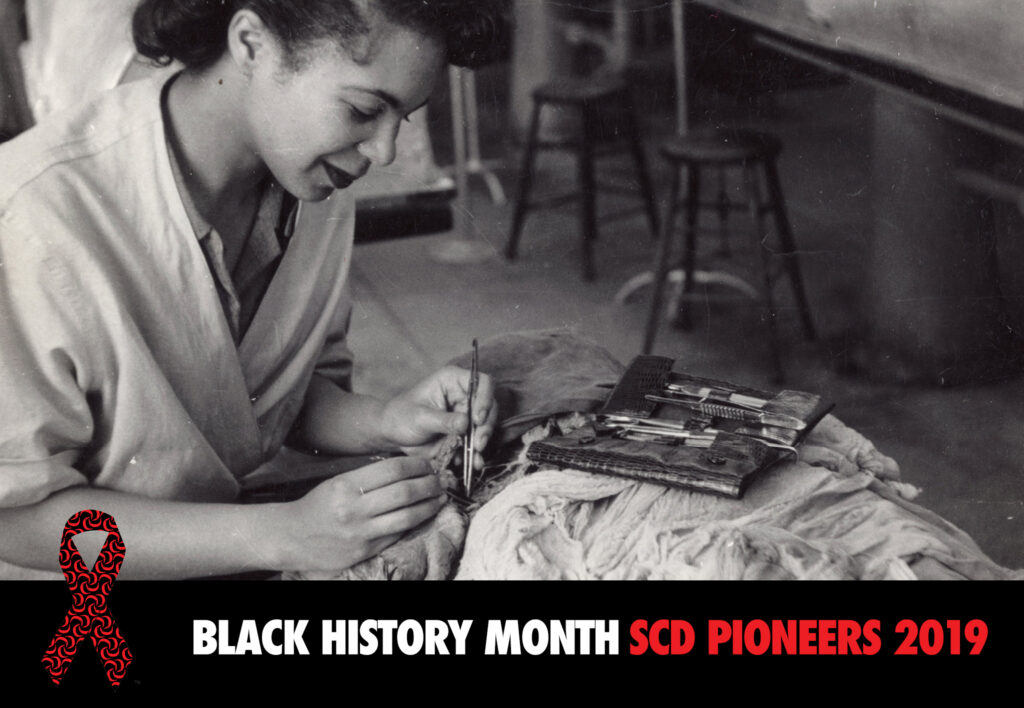 Sickle Cell Disease Association of America, Inc. (SCDAA) celebrates the life and work of Dr. Doris L. Wethers who died at the age of 91 on January 28, 2019.
Dr. Wethers’ research and advocacy efforts helped lead to mandatory testing of all newborns for sickle cell disease. She broke racial barriers in the medical world when she became the first black chief of a medical department in 1965 as the director of pediatrics at Knickerbocker Hospital in West Harlem. She was later director of pediatrics from 1969 to 1974 at Sydenham Hospital (which was shuttered in 1980) and then, until 1979, at St. Luke’s Hospital Center (now Mount Sinai St. Luke’s). She became St. Luke’s first black attending physician in 1958.
Dr. Wethers opened sickle cell disease programs at all three hospitals, conducted research and helped draft landmark legislation in New York to require screening of infants for the disorder. Over the course of her career at the hospitals, the average life expectancy of children born with sickle cell rose from about 18 to 50. The increase was attributed largely to early detection, infection prevention through the use of penicillin and other breakthroughs that helped mitigate pain and prolong life.
In 1987, Dr. Wethers was the chair of a National Institutes of Health panel that recommended routine testing for newborn babies regardless of race or ethnicity. New York was the first state to mandate such testing, in 1975, and all states provided for universal screening by 2006.
SCDAA thanks Dr. Wethers for being a trailblazer for women and for people of color in the medical field and for her tireless efforts, as a true pioneer, to serve those living with sickle cell disease. Rest in peace, Dr. Wethers, knowing that your work advanced sickle cell treatment and helped to improve the quality of life for those living with this life-threatening disease. SCDAA sends its condolences to Dr. Wethers’ family and friends. You are in our thoughts and prayers.
(This statement includes excerpts from the February 7, 2019 New York Times article,
“Dr. Doris Wethers, 91, on Front Lines Against Sickle Cell, Dies.”) Photo credit: Courtesy of the New York Times.