




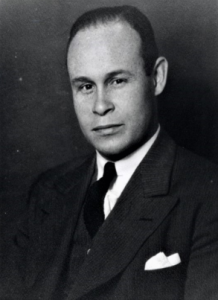
 Our final #SCDHistoryHighlight of 2026 explores the life and career of Dr. Charles Drew, a pioneering physician whose work paved the way for our modern-day blood banking system. Thanks to his research, individuals with sickle cell disease have access to safe and timely blood transfusions.
Dr. Drew was born in 1904 in Washington, D.C. He was a talented athlete and earned a partial scholarship to Amherst College in Massachusetts, where he was one of the few African Americans on campus. After graduating, he taught biology and coached at Morgan College (now Morgan State University) before attending medical school at McGill University in Canada. During his residency at Montreal Hospital, he developed an interest in blood transfusions and their effectiveness in treating shock.
He began his medical career at Howard University, practicing as a faculty instructor for pathology and later taking an appointment at the Freedman’s Hospital as a surgeon. In 1940, he completed his postdoctoral studies at Columbia University and became the first African American to earn a Doctor of Science in Medicine degree.
His postdoctoral thesis, titled “Banked Blood: A Study on Blood Preservation,” determined how to process and preserve blood plasma — a strategy that increased the length of time that blood could be stored. This research was completed in time to be of great use during World War II, and Dr. Drew led efforts to collect, preserve and internationally ship approximately 14,500 liters of blood through the Blood for Britain campaign.
In 1941, Dr. Drew was appointed assistant director of the first American Red Cross Blood Bank. During his time with the organization, he invented the “bloodmobile,” which allowed blood to be collected and transported on-the-go. Dr. Drew strongly objected to the blood bank segregating their blood storage and ultimately resigned from his position in protest of this racist policy.
Dr. Drew went on to rejoin faculty at Howard University, where he worked until he tragically passed away in a car accident at the age of 45. Dr. Drew’s research lay the foundation for safe and accessible blood transfusions, and his advocacy promoted equity in medicine — key elements of wellness for individuals with sickle cell disease across the globe.