



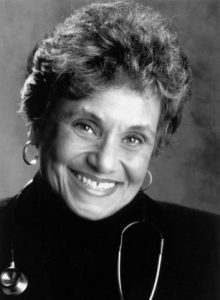
 This week, meet Dr. Marilyn Hughes Gaston, whose dedication and passion for health care led her to pave the way for equity. Dr. Gaston’s special focus on sickle cell disease helped shape our understanding of the condition and its management.
Born in 1939, Dr. Gaston’s family faced poverty and discrimination, but she knew by age nine that she wanted to become a physician. When she was a teenager, her mother became ill with what would later be diagnosed as cervical cancer. The family had no health insurance and faced other barriers to access, which meant Dr. Gaston’s mother was not properly treated. After witnessing her mother collapse in their living room due to the lack of care, Dr. Gaston resolved to overcome the odds and pursue a career in medicine.
Dr. Gaston earned an undergraduate degree at the University of Miami before enrolling in the University of Cincinnati College of Medicine, where she was the only Black woman in her class. She became interested in sickle cell disease during her internship at Philadelphia General Hospital in 1964. According to Changing the Face of Medicine, “one evening, during her internship, Dr. Gaston admitted a baby with a badly swollen hand. No trauma was reported, and she could not find the cause of the swelling. Her supervising resident suggested she check the blood work for evidence of sickle cell disease. The child did have SCD, and his hand was swollen from infection. Gaston was appalled that she hadn’t even considered checking for this condition and set out to learn everything she could about it.”
Dr. Gaston dutifully began her studies of sickle cell disease, securing federal grants and establishing herself as a leading expert in the condition. In 1986, she published her landmark research on penicillin prophylaxis. Her national study determined that giving children with SCD preventative penicillin from birth reduced the complications of sickle cell disease. Her work indicated that newborn screening was key to identifying SCD early and treating it properly. Newborn screening now identifies many conditions beyond sickle cell and is standard practice in U.S. public health.
In addition to her groundbreaking work in the sickle cell space, Dr. Gaston spent many years as a medical expert with the National Institutes of Health and went on to become the director of the Bureau of Primary Health Care in the U.S. Health Resources and Services Administration. She was the first Black woman to direct a public health service bureau in the country. Her dedication to improving health care for poor and underserved families has left a lasting mark on history. Thank you, Dr. Gaston, for your commitment to our community.