
Tag Archives: Black History Month

Black History Month: Our Current Member Organizations

As Black History Month ends, we would like to look to the future for our final #SCDHistoryHighlight at the amazing work organizations across the country are doing to create a safer environment for our community. We’ve seen many landmark decisions and groundbreaking treatments in the more than 50 years since SCDAA’s founding, but one thing has remained true throughout – that our member organizations are the key to our progress.

We currently have 57 member organizations that serve sickle cell warriors, caregivers and community members across 30 states. We define our membership into three categories:

  • Direct Service Agency – These organizations provide support including but not limited to: Case management, testing and screening, counseling and/or medical home assistance.
  • Support Service Agency – These organizations provide support including but not limited to: Medical bill assistance, transportation, career counseling/planning, medical co-pay, funeral/burial, assistance, housing, clothing, food, SSI/Disability, insurance application assistance.
  • Advocacy Service Agency – These organizations provide support including but not limited to: Disseminating SCD/SCT information, attending health fairs and participating and/or host local advocacy events.

We deeply value the work of our member organizations, and we work collaboratively across the country to affect positive change at the national, state and local levels. We join together in Washington, D.C., during our Advocacy Days events to raise our voices and ensure that our community-based organizations’ representatives understand the issues facing the sickle cell community. Our member organizations also coalesce during our Annual National Convention in October to support each other in their goals and grow their missions.

All told, our member organizations collectively serve over 500,000 children and adults living with sickle cell and their caregivers. These organizations are our boots on the ground, taking dreams and making them realities. As we step into the future, we look to these groups to steer the next era of sickle cell history. Click here to meet our member organizations.  

Black History Month: National Sickle Cell Anemia Control Act

After our founding, one of SCDAA’s earliest goals was to ensure the National Sickle Cell Anemia Control Act of 1972 was passed. With our early member organizations in tow, Dr. Whitten and the association began to advocate for this landmark piece of legislation. Our #SCDHistoryHighlight this week looks at why this act was so important for moving sickle cell treatment and research forward.

During the 1960s, the civil rights movement brought many issues of racial inequality, including health care disparities, to the foreground. As greater attention was paid to these differences in treatment, access and research, awareness of sickle cell disease increased. More people began to recognize the urgent need for better care and advocate for those improvements.

The National Sickle Cell Anemia Control Act of 1972 was introduced in the senate at the end of 1971 and passed into law the next year. It authorized the establishment of the first federal programs promoting sickle cell education, counseling, research, treatments and voluntary screening. The National Sickle Cell Disease Program of the National Heart, Lung and Blood Institute of the National Institutes of Health was implemented, and federally funded Comprehensive Sickle Cell Centers were established.

Without this crucial piece of legislation, and the tireless advocacy that helped to pass it, sickle cell disease treatment and research would not be where it is today. The National Sickle Cell Anemia Control Act of 1972 created the necessary foundation to which we owe a great deal of progress. Its passage is a testament to the power of community action and advocacy as we continue to make #SickleCellHistory!

Black History Month: Our Early Member Organizations

Last week, we learned about the origins of the Sickle Cell Disease Association of America, Inc. (SCDAA) and the vision for a national coordinated approach to addressing sickle cell disease. This week, our #SCDHistoryHighlight draws attention to the important community-based organizations that joined us in our fight and served as our foundation.

During the summer of 1971, the vision for SCDAA – National was formed during a meeting with the 15 member organizations that would soon become our original member organizations. Many of these groups were providing essential support and services to their communities for years prior to this meeting. Each organization offered key perspectives on our shared needs and strategies for reaching our goals. Before too long, SCDAA grew to include other early member organizations, including:

  • SCDAA State Association (Alabama)
  • SCDAA Mobile Chapter (Alabama)
  • SCDAA San Diego (California)
  • SCDAA Connecticut Chapter
  • SCDAA Florida State Association
  • SCDAA Dade County Chapter (Florida)
  • SCDAA Escambia (Florida)
  • SCDAA Northeast Florida
  • SCDAA St. Petersburg Chapter (Florida)
  • Uriel Owens Sickle Cell Disease Association of the Midwest (Kansas)
  • SCDAA – Northwest Louisiana Chapter
  • SCDAA Michigan Chapter
  • SCDAA Kansas City (Missouri)
  • SCDAA Metro St. Louis (Missouri)
  • SCDAA Buffalo & Western New York
  • SCDAA South Piedmont (North Carolina)
  • SCDAA Eastern North Carolina
  • SCDAA Ohio Sickle Cell and Health Association
  • SCDAA Oklahoma
  • SCDAA – Philadelphia/Delaware Valley Chapter (Pennsylvania)
  • SCDAA Texas State Association
  • SCDAA Dallas (Texas)
  • SCDAA Ft. Worth (Texas)
  • SCDAA Texas Gulf Coast (Texas)
  • SCDAA San Antonio (Texas)

While some of these organizations have changed their names and others have closed, many are still working to advance progress in their communities today. Organizations like,  the SCDAA Mobile Chapter, SCDAA Connecticut (now known as Michelle’s House), SCDAA Escambia and Santa Rosa Counties, SCDAA St. Petersburg Chapter, SCDAA Dade County Chapter, Sickle Cell Disease Association of Florida, Uriel Owens Sickle Cell Disease Association of the Midwest, SCDAA Northwest Louisiana Chapter, SCDAA Michigan Chapter, Ohio Sickle Cell and Health Association and SCDAA – Philadelphia/Delaware Valley Chapter remain committed SCDAA member organizations – over 50 years later.

Our member organizations have always been crucial to our mission. As our boots on the ground, they do incredibly important work that is tailored to the communities they serve. Each of these member organizations holds a well-deserved place in SCDAA history.

Black History Month 2025: Dr. Charles F. Whitten

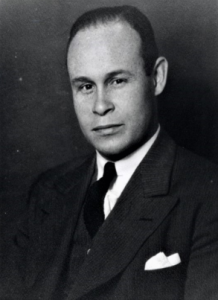
Our first  #SCDHistoryHighlight for Black History Month brings attention to the life and work of SCDAA co-founder Dr. Charles F. Whitten. Dr. Whitten was a pediatric hematologist whose dedication to supporting the health of sickle cell patients paved the way for advances in screening, education and more. His pioneering work makes him one of the most important figures in sickle cell history.

Dr. Whitten was born in 1922 in Wilmington, Delaware. He graduated from Howard High School and went on to receive his bachelor’s from the University of Pennsylvania and his medical degree from Meharry Medical College in Nashville, Tennessee. He practiced and studied at many hospitals on the east coast before moving to Detroit, Michigan, to study pediatric hematology under Dr. Wolf Zeltzer. In 1956, he was selected to serve as the clinical director of pediatrics at Detroit Receiving Hospital, becoming the first African American to hold that position.

Dr. Whitten is widely celebrated to this day for his dedication to sickle cell screening. In 1974, he established the Sickle Cell Detection and Information Center in Detroit, Michigan. The center was the most comprehensive community program in the country at the time. During his time at the center, Dr. Whitten educated children and families about sickle cell disease and created color-coded dice (also known as “Whitten Dice”) to teach couples about the genetic risks of the condition.

#BlackHistoryMonthHeroes: Carlton Haywood Jr.

SCDAA’s #BlackHistoryMonthHeroes highlights prominent Black members of our community who have made their mark on our history. Stay tuned this month to learn more about these inspiring individuals. 


#BlackHistoryMonth Meet the late Carlton Haywood Jr. – a trailblazer in the field of health equity and bioethics. Born with sickle cell disease, Carlton never let his illness hold him back. He was an all-star student and held many degrees, including a Ph.D. in Bioethics and Health Policy from the John Hopkins Bloomberg School of Public Health. His research, informed by his own experiences with SCD, earned him a competitive National Institutes of Health grant and recognition as a leader in his field. Despite the challenges he faced, Carlton’s unwavering spirit and passion for health equity and bioethics inspired many. His legacy will live on as a shining example of resilience and dedication.    

#BlackHistoryMonthHeroes: Dr. Kwaku Ohene-Frempong

SCDAA’s #BlackHistoryMonthHeroes highlights prominent Black members of our community who have made their mark on our history. Stay tuned this month to learn more about these inspiring individuals. 


#BlackHistoryMonth Meet the late Kwaku Ohene-Frempong, M.D., – a renowned pediatric hematologist-oncologist and expert in sickle cell disease. Dr. Ohene-Frempong grew up in Ghana, where he excelled as a track-and-field athlete. He completed medical school and a residency in pediatrics, followed by a fellowship in pediatric hematology-oncology in the U.S. He dedicated his career to serving patients with sickle cell disease at Tulane University School of Medicine and the Children’s Hospital of Philadelphia. Upon retiring, he returned to Ghana to establish public health initiatives for SCD screening and treatment. Dr. Ohene-Frempong’s passion for improving the lives of those affected by sickle cell disease has left a lasting impact. His dedication to improving access to care, education and public health initiatives for SCD has inspired many to continue his work and carry on his legacy.   

#BlackHistoryMonthHeroes: Hertz Nazaire

SCDAA’s #BlackHistoryMonthHeroes highlights prominent Black members of our community who have made their mark on our history. Stay tuned this month to learn more about these inspiring individuals. 

Meet the late Hertz Nazaire – a talented artist and author who used his brush to spread awareness about sickle cell disease. At just 9 years old, Hertz began honing his skills in NYC and later perfected his craft at The Art Institute of Fort Lauderdale and the University of Bridgeport. Known for his advocacy work and his “Finding Your Colors” adult coloring book series, Hertz was dedicated to using his art as therapy for those impacted by stress. Hertz lost his battle to sickle cell in late 2021, but his commitment to SCD advocacy and his impact on the art world will not be forgotten. 


SCDAA Celebrate Black History Month: Prodigy

Our final #BlackHistoryMonth highlight is dedicated to rapper and sickle cell warrior Albert “Prodigy” Johnson, one-half of the iconic 90’s rap duo Mobb Deep. Prodigy was born in the 1970s to a family of musicians and was diagnosed with sickle cell SS at three months old. He grew up in Queens, New York City, and formed Mobb Deep with his partner Kejuan “Havoc” Muchita while attending the High School of Art and Design in Manhattan. They released their breakthrough album “The Infamous” in 1995, which is widely recognized as a hip-hop classic.
 
Mobb Deep’s street-smart rap style and emotionally charged lyrics are credited with the renaissance of the East Coast hip-hop scene. Mariah Carey, Jordan Knight, Kanye West and Jay Z have all sampled tracks from the group.
 
Prodigy made music with Mobb Deep and on a solo basis until the mid-2010s. He lost his battle to sickle cell in 2017, but his music lives on. Hear what he had to say about living with sickle cell in this 2011 interview.


SCDAA Celebrates Black History Month: Paul Williams

Meet Paul Williams, one of the founding members of the legendary Motown group The Temptations. Williams began singing as a kid with Eddie Kendricks in their church choir in Birmingham, Alabama. The two pursued music careers as members of various groups, eventually moving to Detroit to join Otis Williams, Melvin Franklin and Elbridge Bryant as The Temptations.

With Williams on board, the group released many hits, including “My Girl.” Williams was considered the best dancer in the group and choreographed many of their moves. He also served as the original choreographer for The Supremes. His battle as a sickle cell warrior was hidden from the public, and his health issues eventually caused him to leave the group. Williams’ indelible impact helped cement The Temptations’ place in history as one of the greatest vocal groups in modern times and trailblazers in the evolution of R&B and soul music.