



Tag Archives: SCDAA Statement

MARAC Statement: Pfizer Inclacumab Announcement

August 15, 2025 – In a statement issued today, Pfizer announced the results of their Phase 3 THRIVE-131 study evaluating inclacumab. Although inclacumab was generally well tolerated in THRIVE-131, the study results concluded that inclacumab “did not meet its primary endpoint of significant reduction in the rate of vaso-occlusive crises (VOCs) in participants receiving inclacumab versus placebo every 12 weeks.” The Medical and Research Advisory Committee (MARAC) of the Sickle Cell Disease Association of America, Inc. (SCDAA) would like to express its disappointment in hearing this news. While we recognize that not all therapies will be approved, this report does present a setback to the sickle cell disease community. It underscores the need for further research and clinical trials to find a universal cure for this rare disease.

Sickle cell disease (SCD) is a rare condition that affects over 100,000 Americans and millions across the world. Progress has been made in the treatment of the disease since the approval of hydroxyurea 1997 but it has been slow and far and few between. In addition to hydroxyurea, only two other medications are currently available to treat sickle cell patients: L- glutamine and crizanlizumab. These disease modifying therapies have successfully addressed such major complications as acute pain crisis and acute chest syndrome, among others. Still individuals continue to report issues such as fatigue, chronic pain and other symptoms that result in poor quality of life. Recently approved cell and gene therapies are available and are potentially curative but are costly and require a significant time commitment for the transplant procedure.

MARAC recognizes that while the Pfizer study did not achieve the anticipated outcomes, we applaud those individuals who participated in this and other in clinical trials. Had the therapy achieved its primary clinical trial endpoint, it would have been promising. MARAC encourages the pharmaceutical industry and the Food and Drug Administration (FDA) to work with the sickle cell community to continue to search for therapies that not only address the clinical outcomes often evaluated in sickle cell studies but also explore outcome measures and endpoints that address patient-reported outcomes that impact quality of life.

SCDAA has also joined with a community of sickle cell disease advocacy organizations with this response.

SCDAA’s CHW Training Program Accredited by Maryland

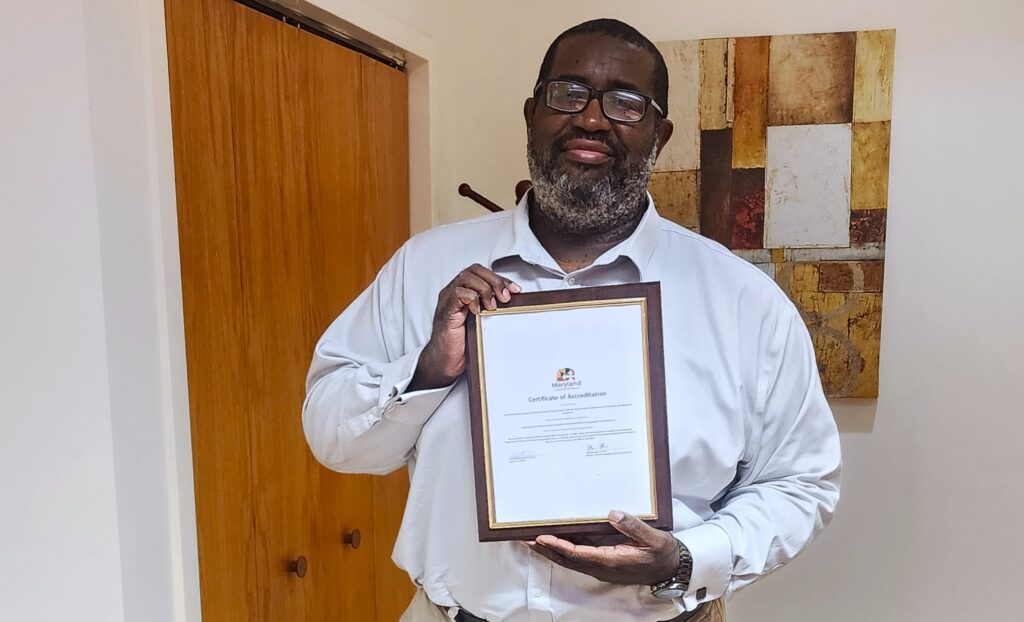
Exciting News: the Maryland Department of Health has officially accredited SCDAA’s Community Health Worker Training! This accolade will allow our program to have an even bigger impact in the state. Students who have successfully completed our training program can now apply for CHW certification with the Maryland Department of Health. Congrats to our CHW team on this accomplishment!

P.O.W.E.R. CHW Award Nominations are Now Open!

Each year during the SCDAA Annual National Convention, we recognize the amazing work performed by community health workers (CHWs) with the SCDAA P.O.W.E.R. CHW Award. The CHW Award honors exemplary performance by individuals who have been identified by their supervisors and peers as having consistently excelled in their positions and demonstrated integrity and a strong commitment to the sickle cell disease (SCD) community and values of the community health worker profession.

If you would like to nominate a CHW for the award, please fill out the below document and submit to the SCDAA Senior Community Impact & Engagement Manager Kevin Amado at kamado@sicklecelldisease.org. The deadline for submission is Friday, August 29.

CMS Expands Access to the CGT Access Model

On July 15, 2025, the Centers for Medicare & Medicaid Services (CMS) announced expansions to the Cell and Gene Therapy (CGT) Access Model.

“The Sickle Cell Disease Association of America, Inc., is excited by the news that CMS has reached agreements with drug manufacturers to provide gene therapies to treat sickle cell disease to Medicaid recipients and that 33 states, plus the District of Columbia and Puerto Rico, have joined a program that ties Medicaid payments to patient outcomes,” says Dr. Edward Donnell Ivy, SCDAA chief medical officer. “For a long time, the only disease-modifying therapy for sickle cell disease was hydroxyurea, which doesn’t work for many sickle cell patients and leaves the community with limited options for care. The new gene therapies that were approved by the FDA in 2023 will allow individuals the opportunity for transformative therapy with potential cure. However, access to this new therapy might be limited by the cost of the treatment, so it is important for CMS and other stakeholders to get involved in ensuring access to this therapy, particularly since it has been demonstrated that a large portion of the sickle cell population relies on Medicaid for access to care.”

To learn more, click here to read the CMS statement.

SCDAA Statement on the Federal Budget Bill

On July 4, President Trump signed the One Big Beautiful Bill Act into law. SCDAA shares the concerns of many in our SCD community regarding the impact that this act will have on the Medicaid program, access to care and health care overall for sickle cell warriors. We are in the process of carefully analyzing the bill to fully understand its effects and develop guidance for warriors, providers, caregivers and families moving forward. We will keep you updated in the next few weeks with more information and proposed next steps.

SCDAA will continue to advocate on both the federal and state levels as provisions of the law are implemented. Thanks to the many of you who engaged in advocacy on the bill. We are a resilient community and our work must continue.

Advocacy Alert: Save the Sickle Cell Data Collection Program

Last week, the Trump administration announced drastic changes and reductions to federal health programs that support the sickle cell disease community. Specifically, on April 1, all the staff that oversee the Sickle Cell Data Collection (SCDC) Program at the Centers for Disease Control and Prevention (CDC) were terminated. We are very concerned about the future of this program, and we are asking you to please call or email your Representative and Senators to ask that they reverse the cuts and protect the existence of and funding for the Sickle Cell Data Collection Program.

What is the issue?

The CDC cuts are of particular concern to the sickle cell disease community. The Sickle Cell Data Collection program, which now operates in 16 states, collects data for the sickle cell disease community on things like prevalence, insurance coverage, health outcomes and much more. This data is used to develop interventions and policies that aim to improve care for sickle cell warriors. CDC plans to expand the program across the US.

Collecting data in a centralized place is critical to improving care for any disease. Elimination of the SCDC Program would lead to:

  • Poorer health outcomes for SCD warriors. Data can tell us what treatments work best and for whom, allowing health providers to tailor care.
  • Increased costs to the health care system. The less we know about a disease, the harder it is to provide preventive care to stop complications from arising.
  • Stalled progress on research and innovation. Data guides research which in turn leads to more and better treatment options.

We are calling on everyone (not just member organizations or Warriors in one of the 16 states) to contact their Representative and Senators to ask that they protect the Sickle Cell Data Collection Program!

What can you do?
Step One: Find contact information for your lawmakers’ offices!

Step Two: Say or email (please feel free to personalize)

I am [calling/emailing] as a member of the sickle cell disease community and as a constituent to ask that you protect the Sickle Cell Data Collection Program at the CDC. The recent HHS restructuring eliminated essentially all of the staff at the CDC’s Division of Blood Disorders, where the Sickle Cell Data Collection Program, the only surveillance system dedicated to sickle cell disease, is housed. This program helps collect important data on sickle cell disease which in turn:

  • Helps lead to new and more effective treatments.
  • Guides the development of interventions and policies that aim to improve care for sickle cell Warriors and lower costs for the healthcare system as a whole.
  • Prompts where and when new clinics are built in order to best serve the community.  

I am relying on you, as my [Senator/Representative] in Congress, to take action to ensure that the staff for this program are reinstated and to work to protect the funding for this critical program. Thank you for your time and attention to this matter.

SCDAA Statement on the Measles Outbreak

SCDAA is aware of and monitoring the measles outbreaks that have been reported in several states. There is a fair amount of confusion and misinformation online and in the media about how to protect yourself and your family during this time. Parents of young children may be feeling especially anxious and overwhelmed, particularly if your child has sickle cell disease, which may increase the risk of a weaker immune system and infection. It is worth noting that we have had few cases of measles and sickle cell disease in recent U.S. memory.

Measles can cause a fever and rash that starts on the head and moves to the body, arms and legs. It is highly contagious and can be spread from an infected person to their friends and family. As with any infection, if a fever is present, prompt evaluation and treatment may be necessary. In addition, parents can help their children stay hydrated and monitor for an acute pain episode.

SCDAA reminds the sickle cell community that the best way to prevent the measles is through routine vaccinations These include the MMR vaccine and vaccinations for pneumococcal infections. If you and your family have been appropriately vaccinated for measles (receiving two vaccinations at least four weeks apart), the chance that you will catch the measles is low. If you or your family are behind on your vaccinations, now is the time to get up to date! To learn more about the measles and keeping your children safe, click here.

RESOURCES:

SCDAA Statement on Recent Natural Disasters

SCDAA stands in solidarity with the warriors, advocates and community-based organizations who have been recently affected by natural disasters, including the devasting wildfires in California and the many hurricanes which hit southern states in the fall. As we pray for a speedy recovery, we send our sincere gratitude to the emergency response teams who worked tirelessly to contain the fires and provide hurricane assistance.

If you would like to send support to the Los Angeles and/or those impacted by other natural disasters, we encourage you to explore the below resources. We additionally urge you to remember the importance of donating blood, especially for sickle cell warriors. An emergency of this magnitude can make an already short supply worse. No matter where you are in the country, giving blood as soon as you are able could help someone in need.

CALIFORNIA RESOURCES

OTHER NATURAL DISASTER RESOURCES

If you would like to donate to support recovery efforts, you can make contributions to both wildfire relief and hurricane recovery through SCDAA member organizations using the follow links:

SCDAA Statement: CMS Cell and Gene Therapy Access Model

Nearly one year ago, the Food and Drug Administration (FDA) approved two new gene therapies for the treatment of sickle cell disease. The Sickle Cell Disease Association of America Inc. (SCDAA) is pleased that the manufacturers of these two FDA-approved gene therapy treatments have entered into agreements with the Centers for Medicare & Medicaid Services (CMS) to participate in the Cell and Gene Therapy (CGT) Access Model. These cutting-edge treatments are poised to make a difference in the lives of many sickle cell warriors, but their high price tags are a barrier to access. The CGT Access Model is a promising effort to reduce cost for these potentially curative therapies for eligible individuals, allowing more patients to benefit from these significant advancements in treating diseases. According to an announcement from the Department of Health and Human Services, the model “will test outcomes-based agreements for cell and gene therapies, with the aim to improve health outcomes, increase access to cell and gene therapies, and lower health care costs.” We are also heartened to see that the model will provide fertility preservation for patients, marking an important acknowledgment of quality-of-life standards for our community.

The Model will launch in January 2025, and all 50 states may choose to begin participation anytime between January 2025 and January 2026. SCDAA looks forward to working with our community-based organizations and other stakeholders to advocate for state enrollment. The CGT Access Model will provide crucial support to patients where available, and we encourage full participation across the country.

Read the full statement from the Centers for Medicare and Medicaid Services.